Basement Waterproofing NJ Repairs That Can Save You Thousands

A wet basement rarely stays a basement problem for long. In New Jersey, where homes deal with heavy rain, coastal moisture, snowmelt, clay soils, aging foundations, and plenty of below-grade living space, water has a way of turning a small defect into an expensive chain reaction. What starts as a https://lorenzohgab682.laurelcurrent.com/posts/how-basement-waterproofing-nj-improves-indoor-air-quality faint musty smell can become warped flooring upstairs, ruined drywall, mold remediation, foundation movement, and insurance disputes that leave homeowners frustrated and out of pocket.
The painful part is that many of the worst repair bills begin with issues that were relatively manageable at the start. A hairline crack that could have been sealed early spreads under freeze and thaw cycles. A neglected sump pump fails during one big storm. A clogged gutter dumps hundreds of gallons beside the footing week after week. By the time the homeowner notices bubbling paint or a damp carpet edge, the repair is no longer simple.
That is why smart Basement Waterproofing NJ work is not really about keeping a basement dry for its own sake. It is about preserving structural integrity, indoor air quality, finished living space, and resale value. The right repair, done at the right time, can save thousands. The wrong repair, or a patch that only hides the symptom, often means paying twice.
Why New Jersey basements are especially vulnerable
Basement water problems are local. The details matter. A house in Monmouth County may face a different moisture profile than one in Morris, Essex, or Camden County, but the broader New Jersey pattern is familiar. Many homes have older masonry or poured concrete foundations. Many lots were graded decades ago and have settled over time. Add dense soils that drain slowly, mature landscaping that redirects runoff, and weather swings that stress materials, and you have a state where basement moisture is common even in otherwise well-built homes.
In practical terms, water usually enters a basement in one of three ways. It seeps through cracks or porous foundation walls. It rises beneath the slab when hydrostatic pressure builds around the footing. Or it gets in from above because downspouts, grading, window wells, or exterior joints channel runoff straight toward the house. The visible symptom may look the same, a damp wall, a puddle near the corner, efflorescence, a musty odor, but the repair strategy should be very different depending on the path the water takes.
This is where homeowners often lose money. They buy a dehumidifier when they need drainage correction. They paint over masonry when they need crack repair. They finish the basement again after a flood without fixing the water source. Cosmetic work never beats water management.
The expensive domino effect of ignoring moisture
I have seen homeowners treat basement dampness like an inconvenience rather than a building defect. That works for a season, sometimes even a year or two. Then the hidden costs start stacking up.
Moisture raises humidity in the whole house, not just below grade. HVAC systems work harder. Wood framing absorbs water and can swell. Metal fasteners corrode. Insulation loses effectiveness. Adhesives on flooring and wall finishes fail. Stored belongings take the first hit, but the house itself follows soon after.
There is also the issue of air quality. A basement does not have to be visibly flooded to affect the rest of the home. If the lower level smells earthy or stale, that air often migrates upward through the stack effect. Families notice it as allergies, persistent odors, or a room that never quite feels dry. Solving the water problem usually improves comfort in ways people did not expect.
The financial damage becomes even more severe in finished basements. In New Jersey, a lot of homeowners count on that square footage for family rooms, home offices, guest rooms, gyms, or storage. Once drywall, trim, flooring, and furniture are involved, even a small leak can become a five-figure cleanup.
Early repairs that usually cost far less than major restoration
The best money-saving waterproofing repairs are the unglamorous ones. They do not always look dramatic, but they stop water before it multiplies damage.
Crack injection before movement gets worse
A non-structural foundation crack can often be addressed with polyurethane or epoxy injection, depending on whether the goal is waterproofing, structural bonding, or both. When done correctly, this can be a modest repair compared with what happens if the crack widens, leaks repeatedly, or indicates broader settlement.
Polyurethane tends to work well for active water seepage because it expands into the crack path and helps block water. Epoxy has greater structural bonding value in the right conditions, though it is less forgiving if movement continues. The point is not that one material is always better. The point is that early diagnosis matters. A homeowner who seals a wet crack properly when it first appears may spend a fraction of what later structural repairs, interior demolition, and mold remediation would cost.
Extending downspouts and correcting grade
This is one of the least glamorous repairs in the business and one of the most effective. Many wet basements are fed by roof runoff dumped too close to the foundation. If water exits a downspout at the base of the house, or if soil slopes back toward the wall, the foundation is being soaked during every storm.
Correcting grade and extending discharge points away from the house often solves or sharply reduces seepage. It is not unusual to see major improvement from a simple exterior water management fix, especially when the basement issue appears only during heavy rain rather than all the time. Homeowners sometimes jump straight to interior products because they seem easier, but if the yard is funneling water toward the foundation, it makes sense to address that first.
Sump pump replacement before a storm tests it
A sump pump is one of those components people forget until the one night they desperately need it. In a state where big rain events can hit hard, that is a risky approach. Pumps wear out. Floats stick. Discharge lines freeze or clog. Check valves fail. Backup systems lose battery capacity.
A proactive sump pump replacement usually costs far less than tearing out a finished basement after a failure. If the home has a history of groundwater intrusion, the pump is not a convenience. It is a critical defense system. The same goes for battery backups or water-powered backups where appropriate. One strong storm can justify the investment.
Interior drainage when hydrostatic pressure is the real culprit
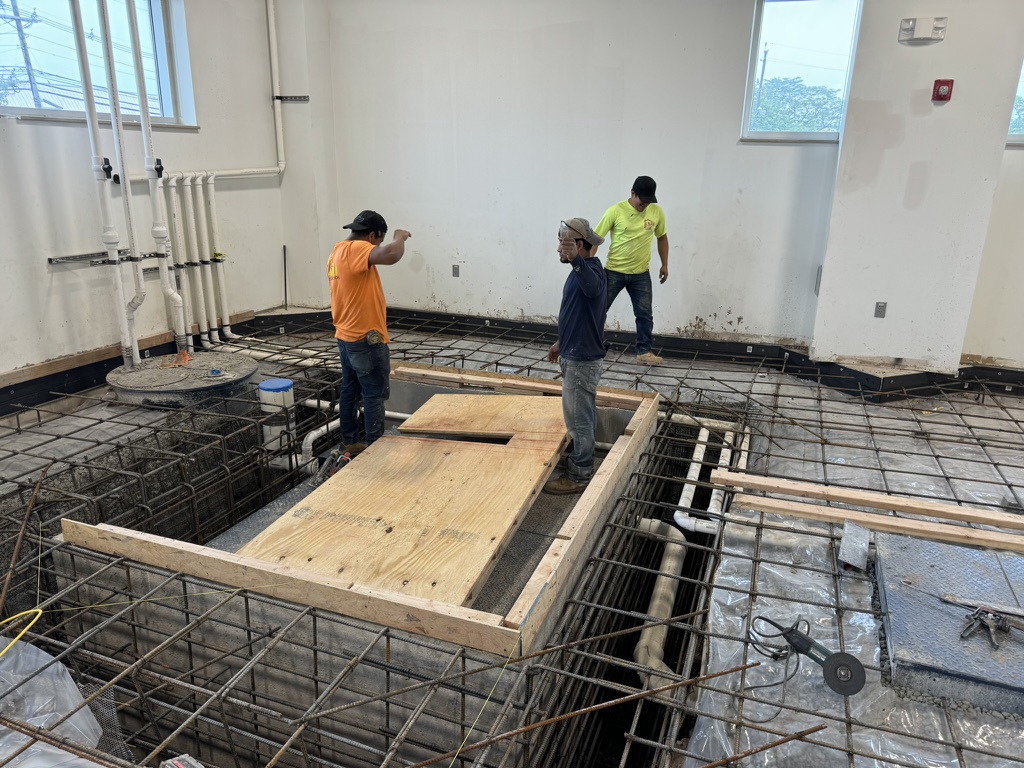
When water comes up through the cove joint or slab because pressure builds beneath the basement floor, paint, patching compounds, and surface sealers are mostly wishful thinking. In these cases, an interior drainage system paired with a sump pump often makes far more sense. This type of repair accepts that water pressure exists and gives it a controlled path into a collection system rather than into finished space.
Homeowners sometimes resist the idea because it involves breaking a narrow perimeter strip of concrete. But if the alternative is recurring water under the floor, repeated damage, and constant humidity, interior drainage can save substantial money over time. It is not the right answer for every basement. It is the right answer when the real problem is below-slab pressure.
Signs that point to a repair you should not delay
Some symptoms are easy to dismiss because they seem cosmetic. They are not always dramatic, but they often reveal active moisture.
- White powder on foundation walls, often called efflorescence
- Musty odors that return even after cleaning
- Peeling paint or blistering wall coatings
- Rust on metal posts, appliances, or bottom edges of utility equipment
- Water stains at the cove joint where wall meets floor
None of these signs automatically means you need a full waterproofing system. They do mean you need an informed inspection. The money-saving move is to identify the source while the damage is still limited.
Exterior waterproofing versus interior waterproofing
This is where nuance matters. Homeowners often ask which method is better, but the honest answer is that they solve different problems.
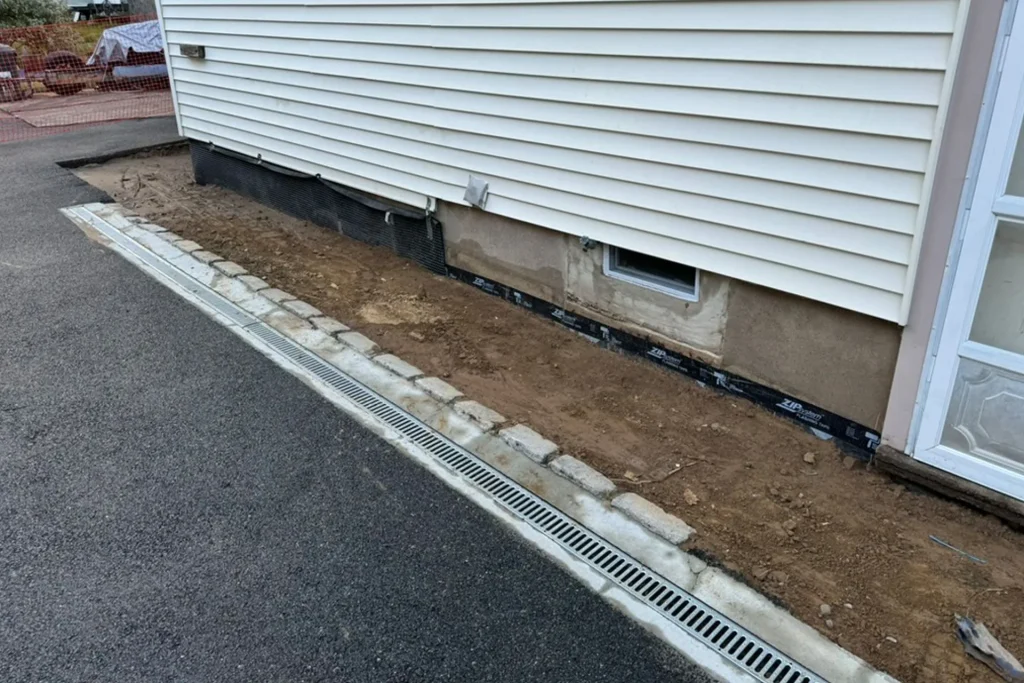
Exterior waterproofing aims to stop water before it reaches the foundation wall. That may involve excavation, wall membrane application, drainage board, footing drain work, and backfill correction. It can be highly effective, especially when a wall itself is allowing lateral seepage or when the original exterior system has failed. It is also more disruptive and often more expensive because of excavation, access, hardscape removal, and landscaping restoration.
Interior waterproofing usually means managing water that reaches the foundation and directing it safely away. It often includes crack repair, interior perimeter drains, sump systems, vapor management, and humidity control. This approach is frequently more practical in finished neighborhoods, attached homes, or sites where full excavation is difficult.
The mistake is assuming one approach is superior in every case. If a single wall crack is leaking after driving rain, targeted crack injection may solve it. If an old stone foundation has chronic seepage on multiple sides, interior drainage and moisture management may be the more economical long-term answer. If exterior grading is poor and a patio pitches toward the home, no interior system should be expected to compensate fully for bad runoff control.
Good Basement Waterproofing NJ work begins with diagnosis, not with a one-size-fits-all package.
The repairs that protect finished basements best
Once a basement is finished, repair strategy changes. The goal is no longer just a dry concrete shell. It is preserving materials that are expensive to remove and difficult to match later.
In finished spaces, hidden moisture is often more damaging than visible puddles. Water can wick into studs, insulation, subfloor panels, and the backs of drywall long before the homeowner sees a stain. That is why a careful contractor looks at moisture patterns, not just obvious leaks. Thermal imaging, moisture readings, and a close look at trim bases, flooring transitions, and utility penetrations can reveal where water is moving.
The most valuable repairs in these settings are often the ones that stop repeat events. A homeowner may not love spending money on drainage, discharge correction, or a pump backup when there is no new couch or flooring to show for it. But compared with replacing a finished family room, those repairs are cheap insurance.
There is also a material lesson many people learn the hard way. Basements should be finished with moisture tolerance in mind. If there has ever been water intrusion, even once, it is wise to avoid finishes that trap moisture or fail catastrophically. Rigid foam, closed-cell insulation strategies where appropriate, inorganic trim choices, raised flooring systems, and careful detailing near slab edges can reduce future loss. Waterproofing and finishing should work together.
Foundation movement, when waterproofing is not enough
Not every wet basement problem is just a waterproofing problem. Sometimes the moisture is a symptom of movement. Stair-step cracks in masonry, sticking doors above grade, bowing walls, or differential floor settlement can point to structural issues that need a broader fix.
This distinction matters because homeowners can waste real money treating structural distress as a moisture-only issue. If hydrostatic pressure is pushing a wall inward, sealing the inside surface will not solve the underlying load problem. Likewise, if a footing has settled, crack repair may stop a leak temporarily but not prevent recurrence.
That does not mean every crack is serious. Many are not. It does mean you should match the repair to the cause. In some homes, waterproofing and structural stabilization need to happen together. Catching that early can prevent one repair from being undone by the other.
Why cheap patch jobs often become expensive twice
The market is full of quick fixes. Waterproof paint. Generic caulk. A bag of hydraulic cement pushed into a wet spot. These products have legitimate uses in the right hands and the right context, but they are often sold as if they can outmuscle water pressure on their own. Usually they cannot.
A homeowner may feel relieved after a weekend patch seems to work. Then the next storm exposes another weak point, or the same leak reappears a few feet away because the water simply found a different path. By then, finishes may already be damaged, and the later professional repair costs more because demolition is involved.
This is one of the most common ways people overspend. Not because they spent too much at first, but because they spent too little on the wrong thing. There is a major difference between maintenance and denial.
Seasonal timing matters more than most homeowners think
In New Jersey, timing repairs intelligently can save money and reduce disruption. Spring often reveals problems because of snowmelt, saturated soil, and rain. Summer can be a practical season for many exterior corrections because weather windows are steadier and excavation work is easier. Fall is the right time to service sump systems, clear gutters, and verify discharge lines before winter arrives. Winter can expose freeze-related cracks, ice blockage at discharge points, and condensation problems from temperature differentials.
If you wait until a storm emergency, your choices narrow fast. Contractors are busier, damage is already spreading, and you are making decisions under pressure. Scheduling an inspection during a dry period, when there is time to trace causes and compare options, usually leads to better work and better pricing.
A realistic view of costs and savings
No ethical contractor should promise exact numbers without seeing the property. Basement conditions vary too much. Access, foundation type, depth, finish level, and water source all matter. Still, the broad financial logic is easy to understand.
A modest drainage correction or downspout improvement can cost far less than even one basement cleanup. A targeted crack repair is often dramatically cheaper than replacing drywall, insulation, baseboards, flooring, and stored contents after repeated seepage. A proactive sump pump replacement and battery backup can cost a fraction of a single flood loss in a finished lower level.
The biggest savings often come from avoiding compound damage. Once moisture leads to mold remediation, structural carpentry repair, flooring replacement, and repainting, even a relatively small leak becomes a large project. That is why preventative or early-stage Basement Waterproofing NJ repairs so often pay for themselves. They interrupt the chain before it gets expensive.
Choosing the right contractor without getting sold the wrong system
This is a field where homeowners benefit from asking a few direct questions. A good waterproofing professional should be able to explain not only what they recommend, but why that approach fits your specific moisture pattern.
- Where is the water entering, and how do you know?
- Are you proposing to stop the water, manage it, or both?
- What conditions would make this system fail or need support from another repair?
- Which parts of the work are essential, and which are optional upgrades?
- How will this affect a finished basement, exterior hardscape, and future maintenance?
The answers should sound specific, not rehearsed. If every problem receives the exact same solution, be careful. Basements are too varied for that. You want someone who distinguishes between seepage through a crack, condensation from humidity, runoff from grading, and pressure from below the slab. Those are different problems with different price tags.
A brief real-world example of how timing changes the bill
One North Jersey homeowner I spoke with had noticed a faint damp smell for over a year. There was no standing water, just a recurring odor and a little white residue on one wall. He assumed it was normal basement stuff and kept a dehumidifier running. Then a late summer storm knocked out power, the old sump pump failed, and water entered along the slab edge. The finished room had to be opened up, flooring came out, lower drywall was cut, and insulation was discarded. The repair bill was several times higher than the earlier estimate he had received for an interior drainage upgrade and sump replacement.
That scenario is common because the first symptoms rarely feel urgent. Homeowners are busy. Basements are out of sight. But water is patient. It keeps working while people wait.
The smartest place to start
If your basement has ever taken on water, smelled persistently musty, shown wall staining, or felt damp in one area after rain, the smartest first step is not buying a product. It is getting a credible diagnosis. You need to know whether the problem is exterior runoff, wall penetration, below-slab pressure, humidity, plumbing leakage, or some combination of those.
Once the cause is clear, the right repair often becomes obvious. Sometimes it is surprisingly simple. Sometimes it requires a system. Either way, the savings come from precision. Not every wet basement needs major work, but nearly every wet basement becomes more expensive when the source is misunderstood or ignored.
For New Jersey homeowners, that is the core value of thoughtful Basement Waterproofing NJ repairs. They do more than dry out a space. They preserve the parts of the house that are costly to rebuild, difficult to insure, and easy to take for granted until a storm makes the lesson expensive.
ARD Waterproofing
Address: 98 Smull Ave, West Caldwell, NJ 07006
Phone number: +12016465936
FAQ About Basement Waterproofing NJ
What is the best waterproofing method for a basement?
The best overall approach to waterproofing a basement is a combined exterior and interior system that stops water at the foundation wall and safely manages any moisture that gets through.
What is the average cost to waterproof a basement?
The average cost to waterproof a basement ranges from $2,500 to $15,000, with most homeowners paying around $5,200 for a complete project.
Can a basement be waterproofed from the inside?
Yes, a basement can be waterproofed from the inside, and it is often the most affordable and least disruptive method.
Ends · CRISTIANCBJF822